

In preparation for last month’s digester installation at the Mujeres en Movimiento community garden in Queens, I collected 8 gallons of digestate from my home biodigester. This digestate is full of the methanogenic microbes that produce biogas, so it can be used to “seed” or inoculate a new digester. Since I had a few gallons of digestate from my digester, I decided to do a quick pH test, as recommended by Solar CITIES co-founder Dr. T. H. Culhane.
In the photo above, you can see litmus paper results for tap water (12:00 position), hand soap (3:00), my digestate (6:00), and vinegar (9:00). As expected, the tap water is about 7, or pH neutral, and the vinegar is acidic, around 4 or 5. My digestate is quite basic, between 8 and 9 on this scale. This surprised me, so I consulted my handy-dandy copy of the “biogas bible”, David House’s The Complete Biogas Handbook. He has a chapter all about biodigester pH, the factors affecting it, and ways to adjust pH-related issues.
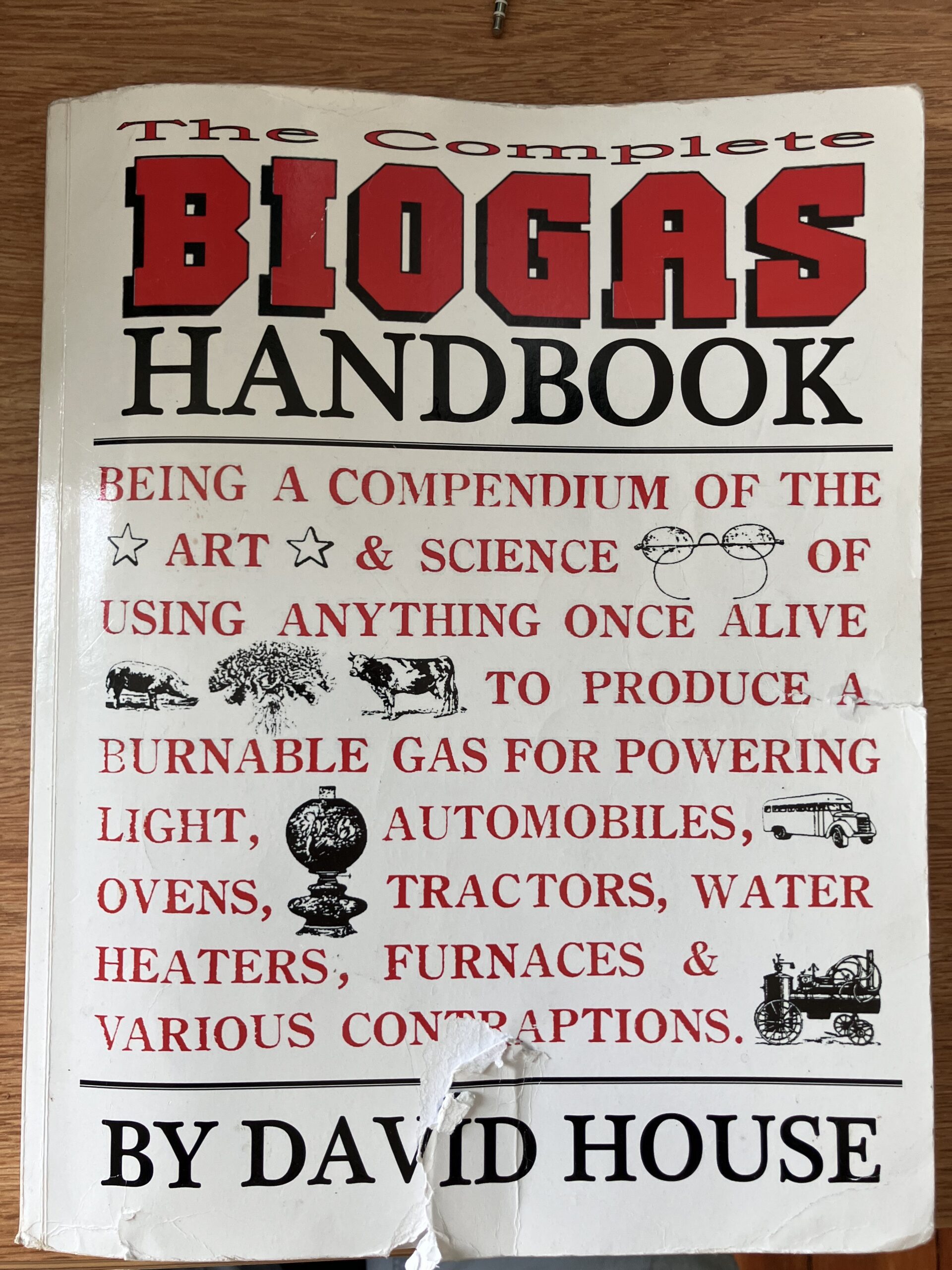
David House’s Complete Biogas Handbook, the first resource I consult when I need biogas information! My copy is pretty tattered because I use it so much 🙂
According to The Complete Biogas Handbook, low (acidic) pH is a common problem with lots of possible solutions, but high (basic) pH is a “rare situation.” The optimum pH range for methanogens is between 6.8-8.5. Values above 8.5 can kill the methanogenic microbes that produce biogas. There are a few possible culprits for this high pH reading:
- I’m not feeding my digester enough. I live alone and don’t generate large quantities of organic waste, so I usually feed the digester once a week or sometimes less. This increases the hydraulic residence time – in other words, whatever I put into the digester stays there for a long time, and accumulates instead of circulating through. This includes nitrogen, which forms ammonia and raises the pH in the tank if it doesn’t get pushed out by adding new feedstock.
- I’m feeding my digester too much nitrogen and not enough carbon. This could be due to the fact that I’ve been experimenting with feeding my digester manure from my cat’s litterbox, which is high in nitrogen!
House suggests three possible ways to lower the pH in a basic biodigester:
- “Wait.” (It’s possible the biodigester may correct itself with time. But since I’m not feeding my digester everyday, this probably isn’t a good solution for me – the accumulated nitrogen won’t get pushed out fast enough.)
- “Recirculate CO2-containing gas.” (CO2 makes the solution more acidic, balancing out the basic pH. But I don’t have any way to do this with my current digester setup.)
- “Raise C/N ratio.” (In other words, there’s too much nitrogen in the feedstock – add more carbon-rich materials to balance it out.)
Out of these options, I prefer the third because it addresses both of the likely culprits. Fortunately, even though I’m not producing large amounts of kitchen waste, I do have another source of carbon: yard clippings! So, I’m going to start adding more yard waste into my digester, being careful to avoid woody materials that won’t break down.
Do you use yard waste clippings in your biodigester? If so, what feedstocks do you recommend, and which do you avoid? Do you dry or rot the yard waste before feeding, or add it directly while fresh? Please share your experiences in the comments below!