
June 5, 2026
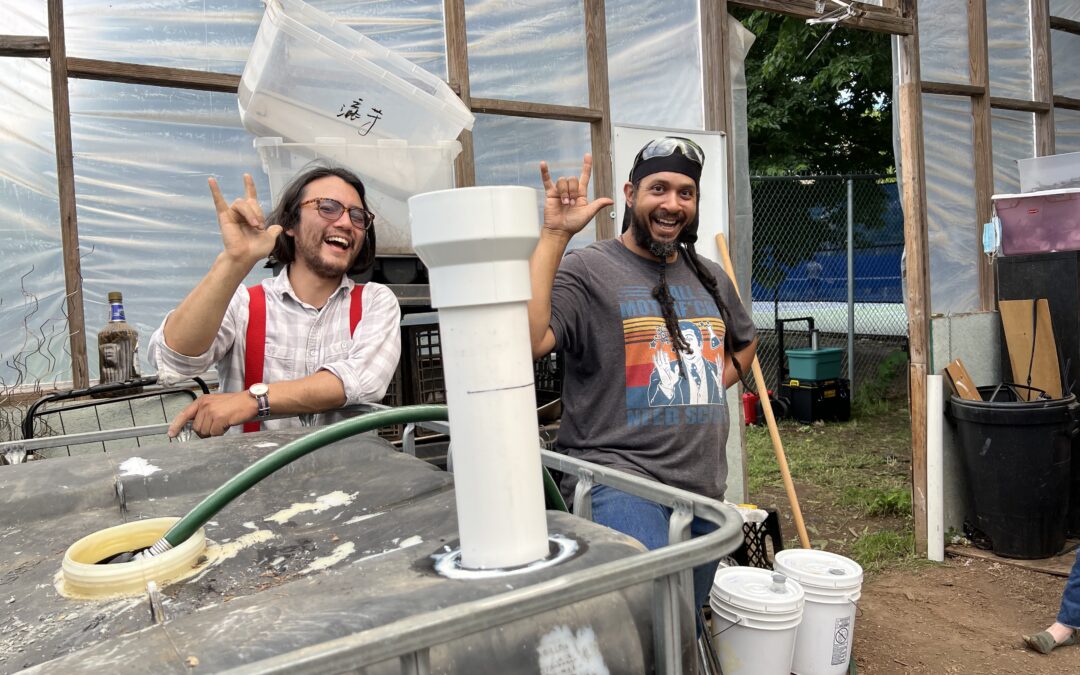
Futurist Farms sits on a half-acre (1/4 hectare) plot in the Poplar neighborhood of North Philadelphia. It’s owned and operated by Dimka Braswell and Bryce Rowe, two Black urban farmers who are combining time-honored agricultural practices with 21st-century problem-solving to cultivate sustainable farming in the city. Even though their farm is small, it’s bursting with life: community plots where immigrant gardeners grow heirloom vegetables; rainwater collection systems and hydroponics; and educational programs for local youth. For Dimka and Bryce, as Black farmers in the United States, farming is about more than just growing fruits and vegetables: it’s about sovereignty, justice, and building a better future by healing communities’ relationship with food, land, and power.
Last year, in May 2025, Solar CITIES hosted a biodigester workshop at Futurist Farms. We hope it will be the first of many biodigester installations in Philadelphia’s urban farms. Do you have a community garden or urban farm in the Philadelphia area? We’d love to install a biodigester with you as well!
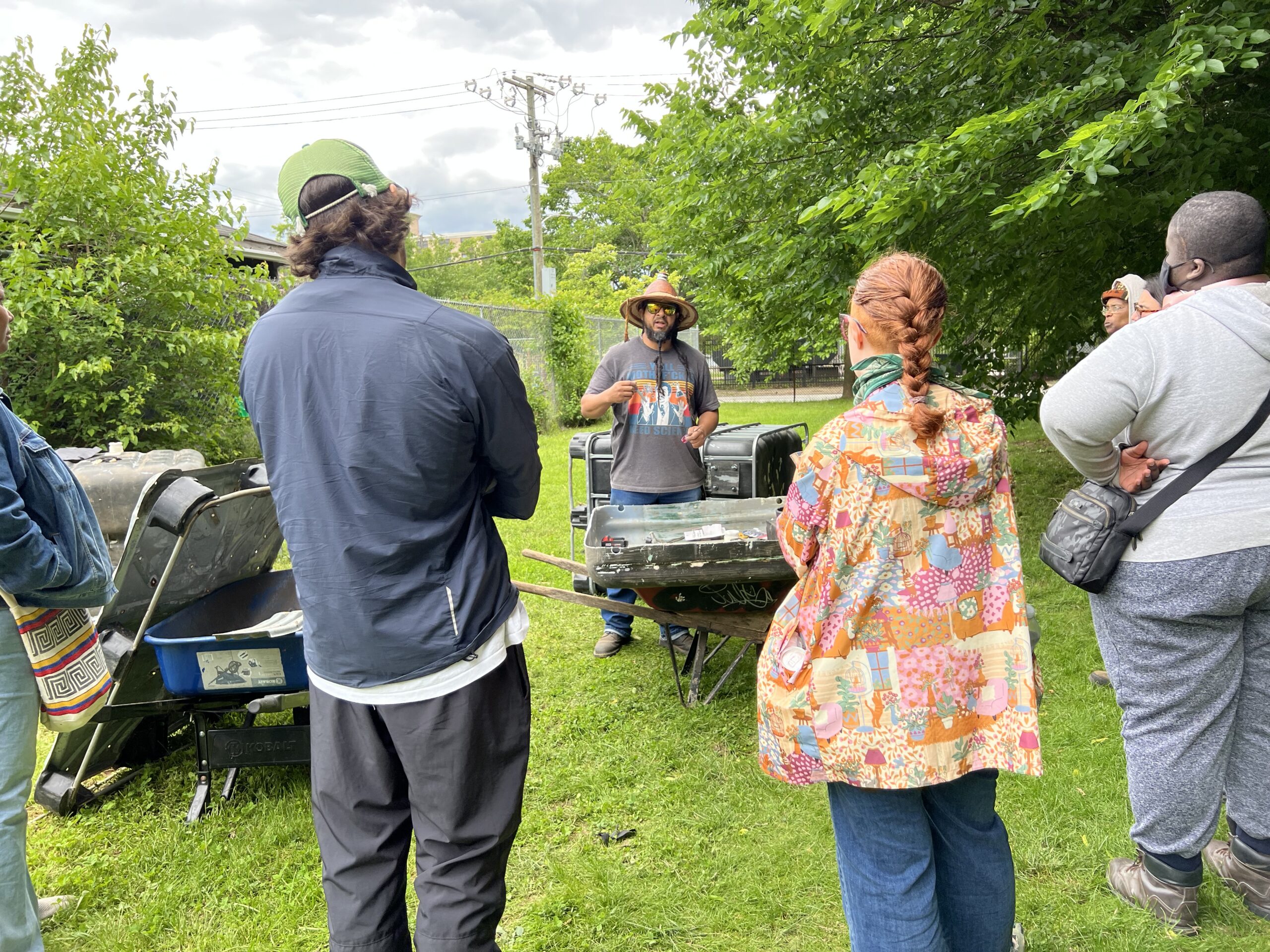
Bryce of Futurist Farms speaking to workshop attendees
Futurist Farms provided three IBC tanks for the installation (one for the digester itself, and two for the floating gas storage system). Solar CITIES provided additional materials (pipes, valves, air-tight seals, tools), plus the skills and knowledge to assemble the biodigester. Unfortunately, due to a miscommunication, we did not have enough manure to start the chemical reaction on the day of the installation. This was the first of several hiccups during the day – but when we host workshops, we always expect the unexpected!
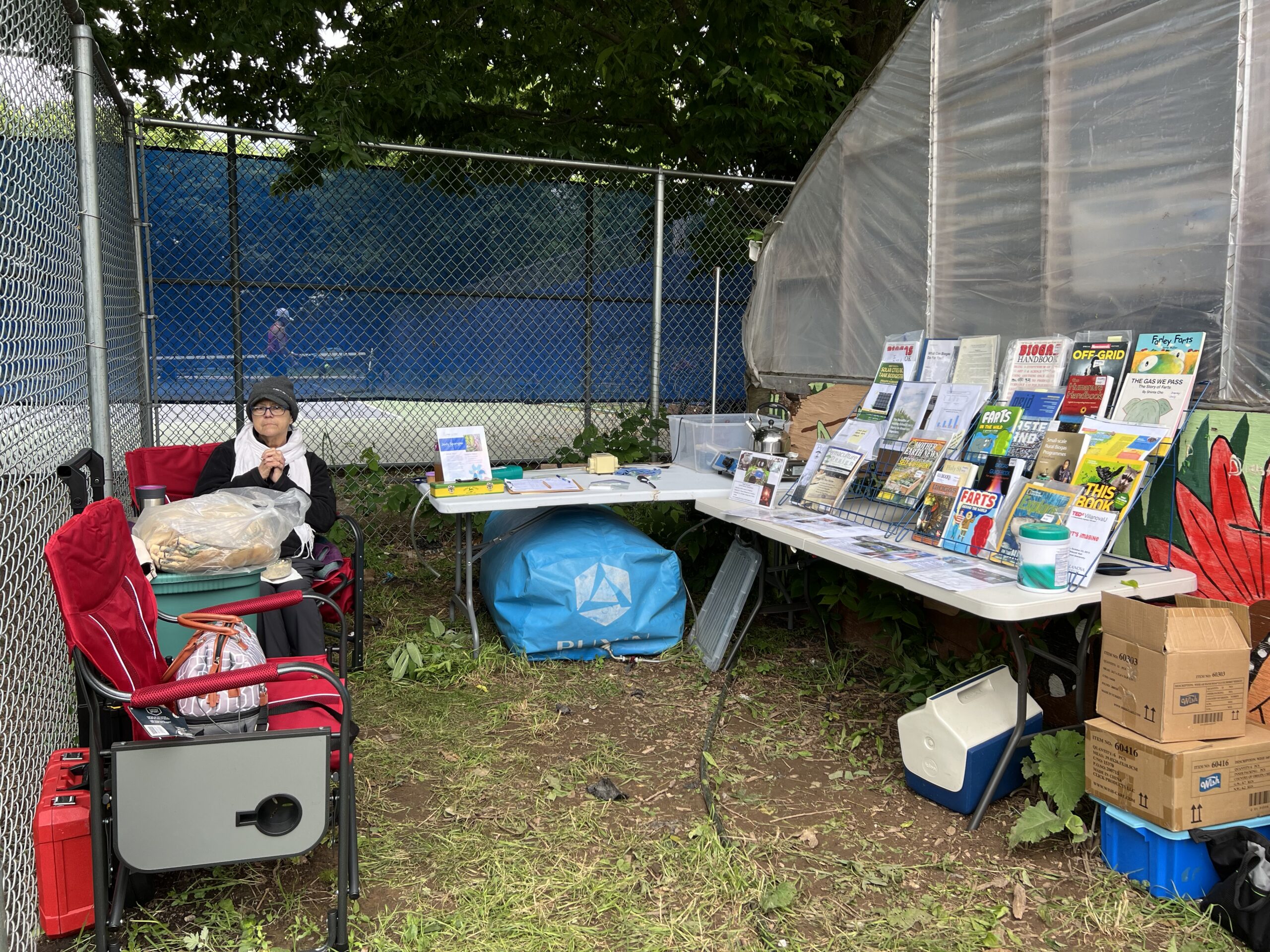
Jody Spangler of Solar CITIES at the educational display table, featuring biogas literature and a sample biogas bag
The farm has a large, plastic-film greenhouse (visible in the photo above) – an ideal location for a biodigester because of the temperature. Biodigesters are happiest and most productive around the temperature of the human body (98 F ~ 37 C), which is known as the “mesophilic” range. (There is also a higher temperature range known as “thermophilic” [130 F ~ 55 C] that can produce even more biogas, but this usually requires electrical heating and insulation.) A greenhouse is a simple, low-tech solution that keeps the biodigester in the mesophilic range.
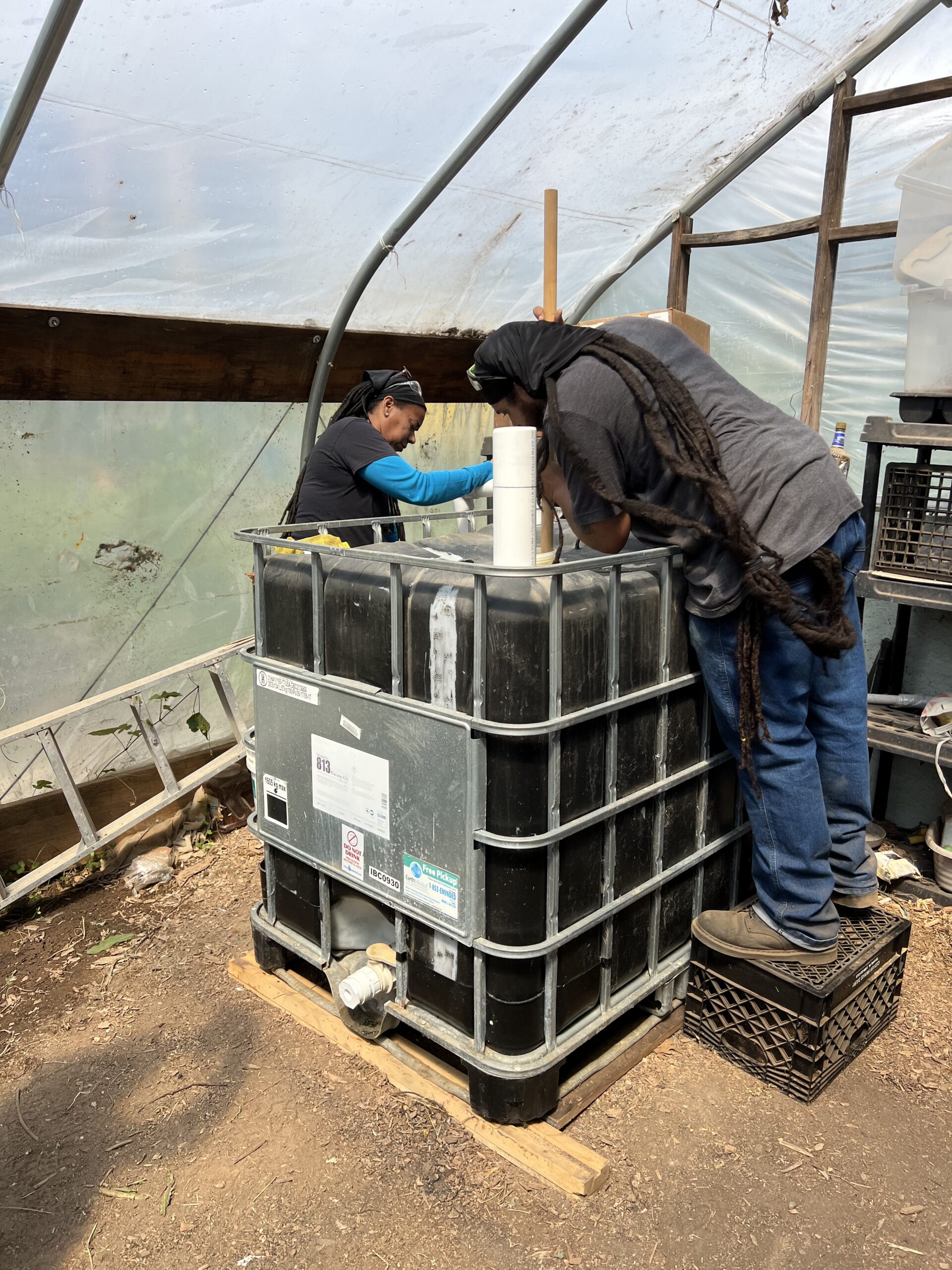
Bryce and Dimka choosing the best location for their biodigester
Choosing the right location is important, because once the biodigester is filled with 1,000 liters of water, it’s hard to move! We placed it in a corner of the greenhouse, leaving enough space around each side to walk around, feed the dragon, collect the liquid effluent, and service any parts. The effluent, or digestate, can be used directly on the farm as a rich fertilizer. Bryce told us that they like to host fish-fry events over the summer, and will feed used frying oil to their baby dragon.
Another unexpected challenge as we started filling the tank with water: we found a leak! (So, in the end it was good that we didn’t have manure to fill it yet!) Bryce used plumber’s caulk and polyurethane foam to fix the leak, as you can see in the photo below.
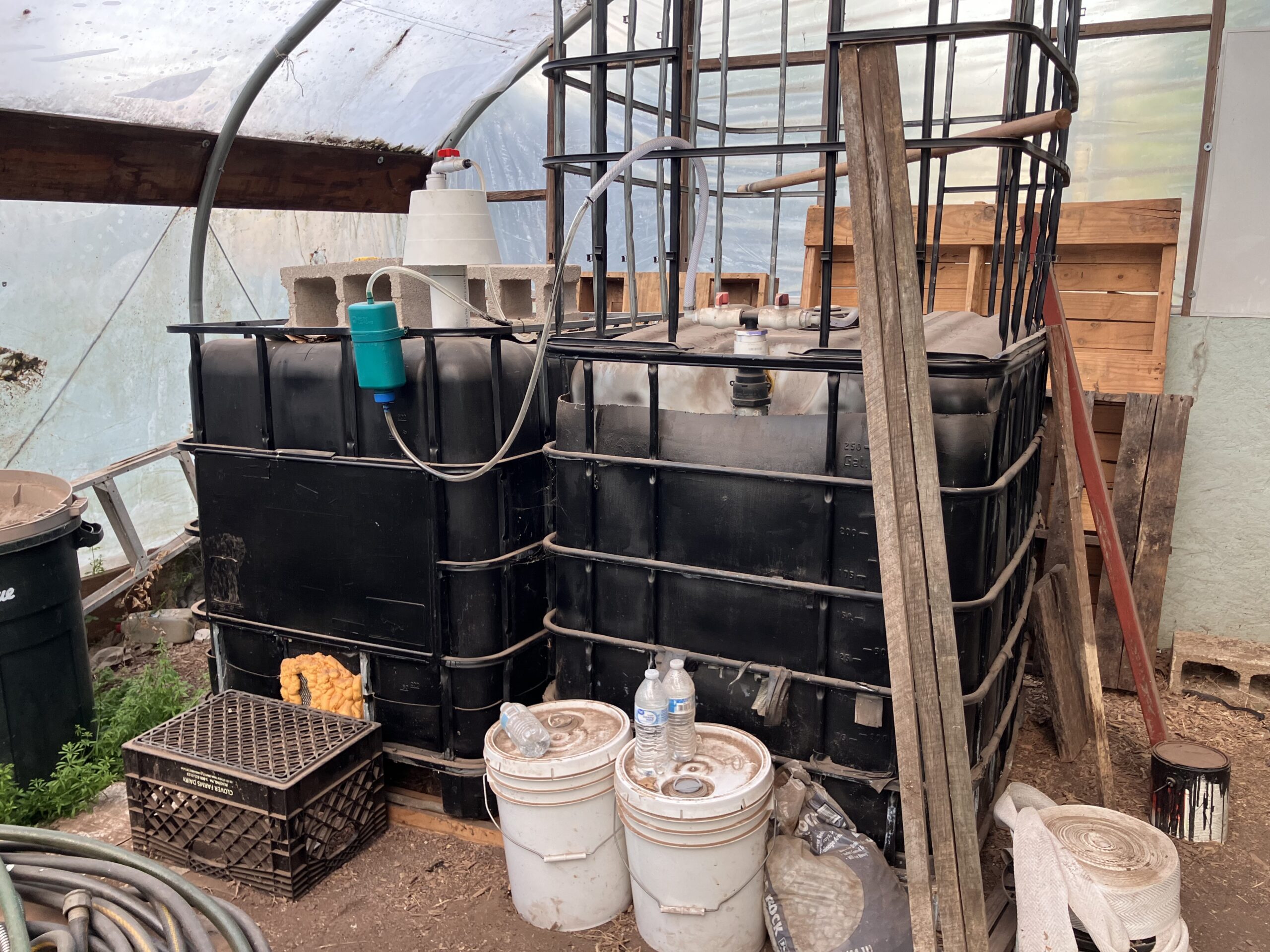
The final digester, installed with scrubber and gas storage system
At the end of the workshop, due to these and other issues, the biodigester unfortunately wasn’t ready to use just yet. But when I returned to the farm in May 2026 to check on their progress, I took this picture of the completed digester, already collecting biogas. Congratulations Bryce and Dimka on your living, breathing baby dragon! Now, when is the fish fry?