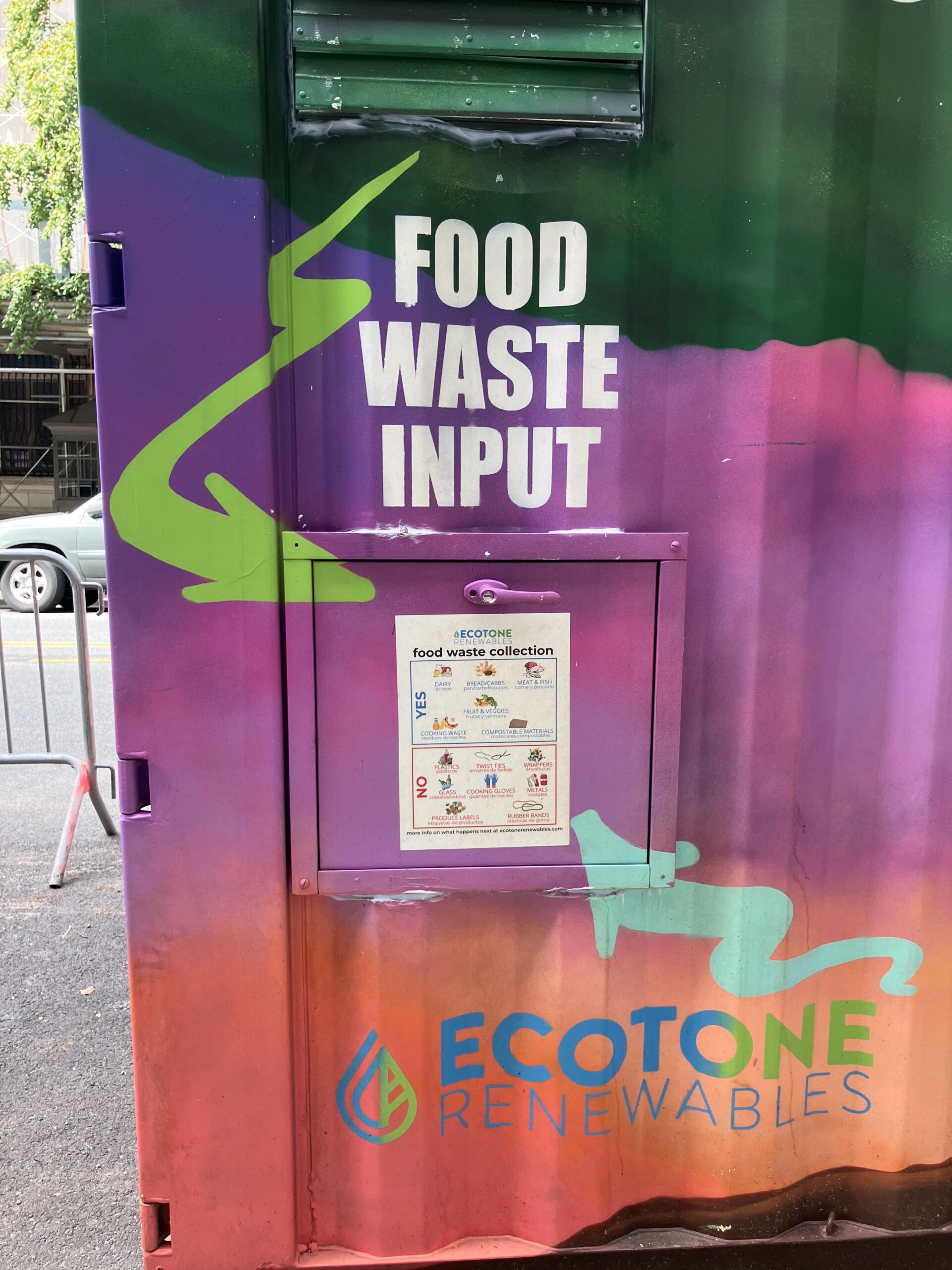
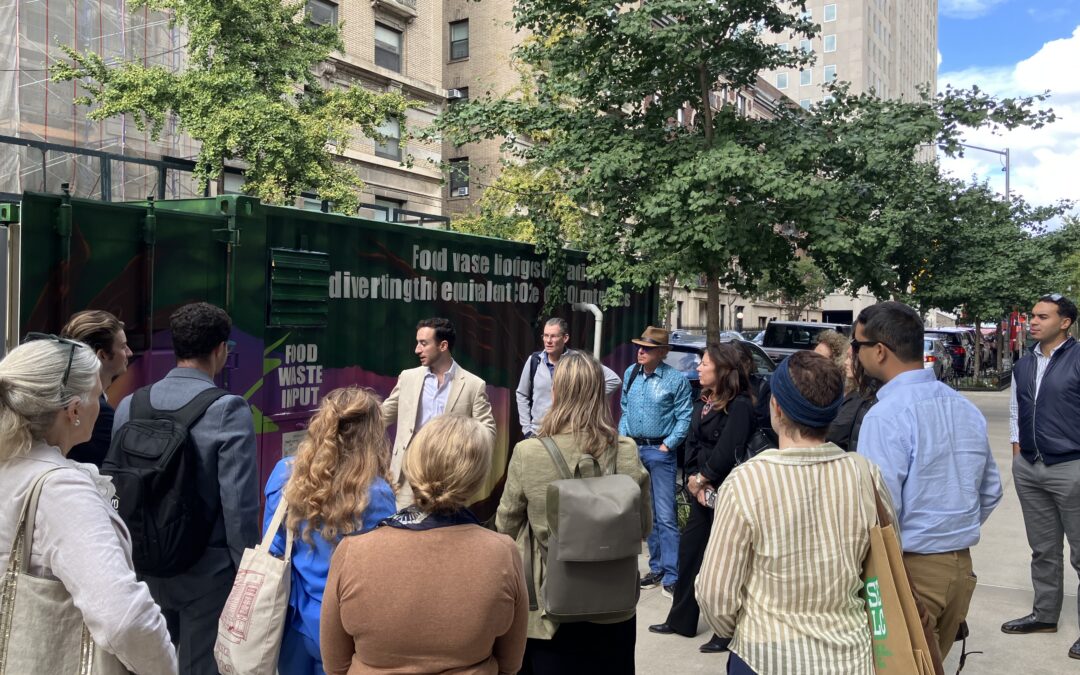
On Wednesday, I had the pleasure of attending an event hosted by Ecotone Renewables as part of New York City’s Climate Week. Ecotone is a Pittsburgh-based company that produces shipping-container biodigesters for food waste management. Their system, called ZEUS (Zero-waste Ecological Upcycling System) can consume up to 1,000 lbs of food waste per week and produces Soil Sauce, a liquid fertilizer with NPK values tested by the laboratory at Michigan State University. The system also produces biogas, although currently most of their customers are more interested in the fertilizer, so that is what their system optimizes for; the biogas is mostly flared, at low enough volumes that it doesn’t require an air permit.
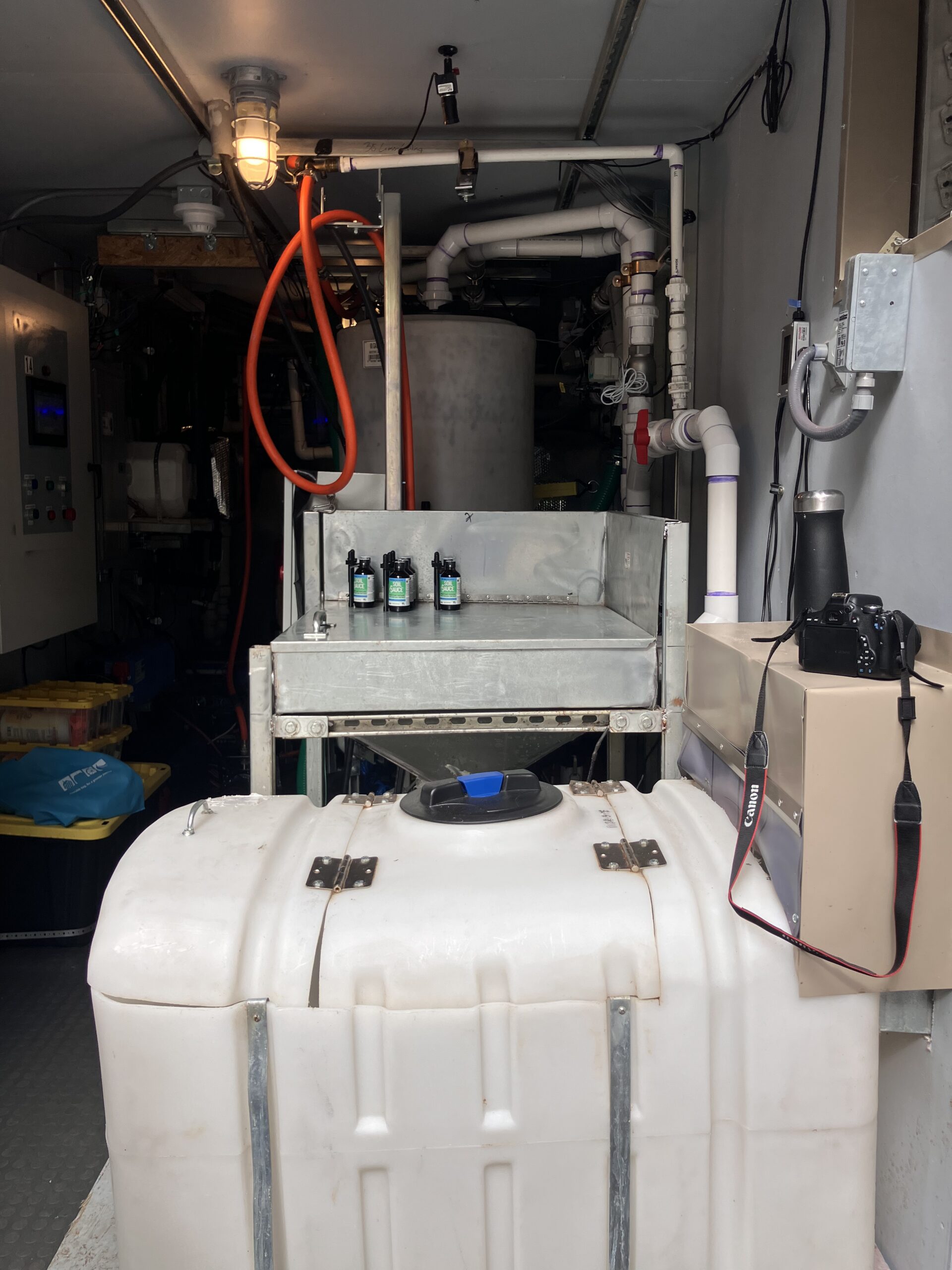
A look inside the ZEUS biodigester shipping container, showing the food waste receptacle, grinding unit, and “Athena” AI-powered camera system that monitors for contamination.
Food waste is deposited via a drawer into this plastic tank, which is attached to a scale. When the scale reaches a certain value of weight, an Ecotone staff member is notified to empty the container into the metal sink with a grinding unit attached. One of the most ingenious components of the ZEUS system is an overhead-mounted camera, called Athena, that monitors the food waste for contamination (such as plastic utensils, or compostable cutlery that nevertheless is not suited for anaerobic digestion). Not only does this automated camera detect contamination, but it also logs data about what kinds of food waste are being disposed of in the unit, so that the customer can adjust its ordering practices accordingly. For example, if lots of onions are being thrown away, Athena can notify the customer to order fewer onions. This provides additional cost savings to the customer, on top of savings from not having to haul as much waste.
Ecotone has about 20 ZEUS units deployed and is constantly improving their technology, currently working on version 5 of their system. Like Solar CITIES, they are also interested in partnering with more K-12 schools to bring sustainable technology, closed-loop recycling, cost savings, education, and inspiration to young people. We’re excited to learn more about Ecotone’s technology and find ways to partner with them to bring biogas education to even more communities and classrooms!