
Friday, May 29, 2026
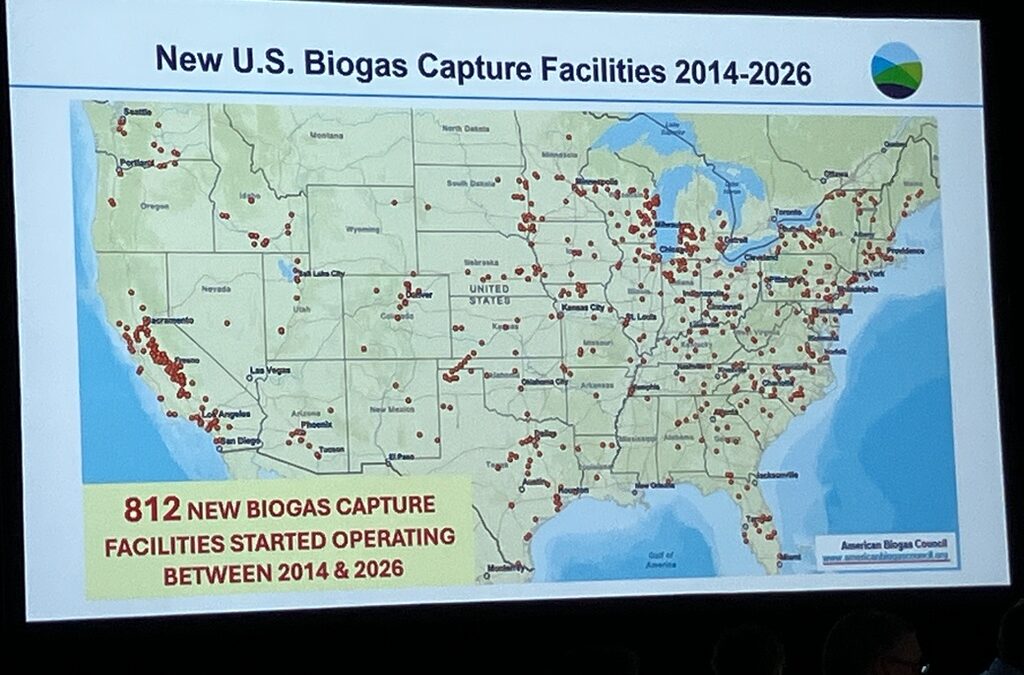
The business of biogas is booming! In the last 12 years, the USA has added over 800 new large-scale biogas capturing facilities at landfills, dairy farms, wastewater treatment plants, and even a few stand-alone food waste facilities. The American Biogas Council estimates that the US’ total biogas production increased from 455 to 778 billion cubic feet between 2014 and 2026. That’s the equivalent of adding 25 million new IBC digesters in the last 12 years! 🤯 📈
This year’s Biogas Americas conference was the largest ever, with more than 2,000 attendees. Everyone I met, I told them the story and mission of Solar CITIES: founded by Dr. T. H. Culhane in a trash-picking community in Cairo, who teamed up with Janice, Jody, and many more to build hundreds of micro-digesters on every continent! As I explained our work to support communities struggling through natural disasters, wars, and climate chaos, I grew to expect one of two reactions.
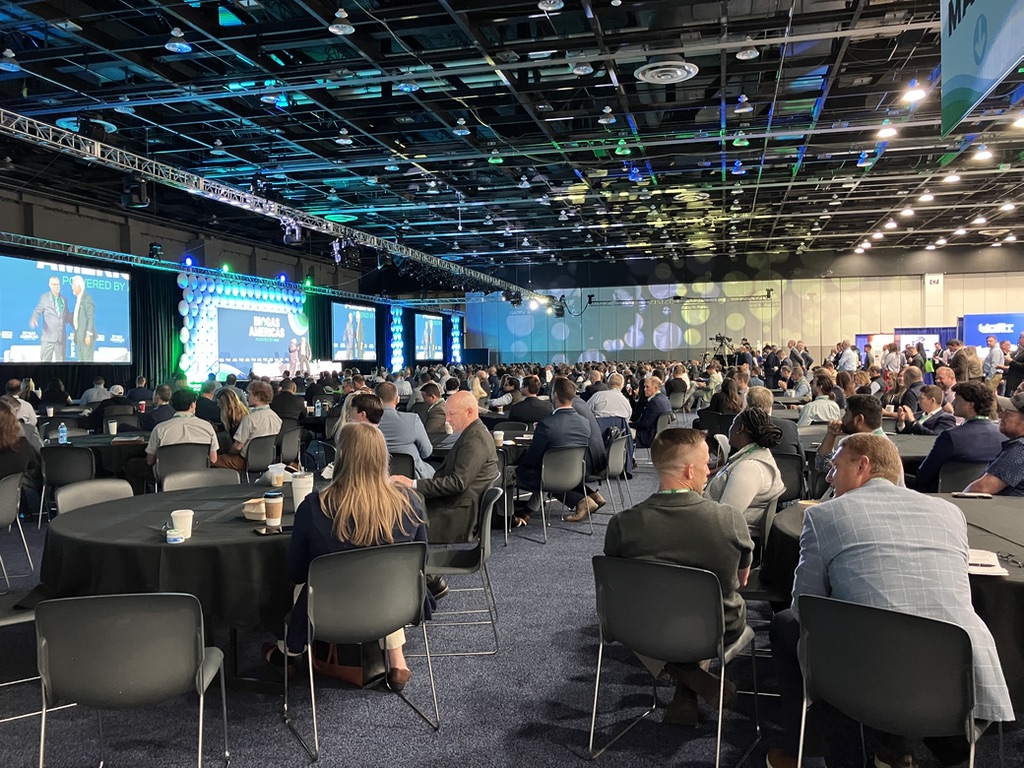
Two thousand conference attendees await the keynote panelists
The most common reaction was enthusiastic interest. People said things like:
“I’ve been wondering if something like this exists!”
“I love everything you just said. Tell me more.”
“Oh yes, I used to work with a similar organization in Honduras.”
“Well in that case, you’re going to want to take a look at our new product…”
The second most common reaction, unfortunately (but not surprisingly), was dismissive. “That’ll never work;” or, “That’s… interesting;” or just a blank stare. After all, most of the 2,000 conference attendees were looking to generate revenue from biogas, in order to offset the high (and ever-increasing) costs of building a large-scale biogas plant. These plants can cost well over a million dollars to build – not to mention all the costs associated with maintenance and day-to-day operations! 💸 💸 In the USA, recouping that investment depends mostly on selling biomethane (upgraded biogas) for renewable energy tax credits.
But Solar CITIES digesters were not designed to maximize biomethane yield for tax credits. They are human-scale, holistic systems that turn organic waste into usable cooking fuel and fertilizer without electricity or thousands of dollars in debt. So, what could I learn from these people that we can apply in our work? And why should they be interested in partnering with us? 🤔 🤔
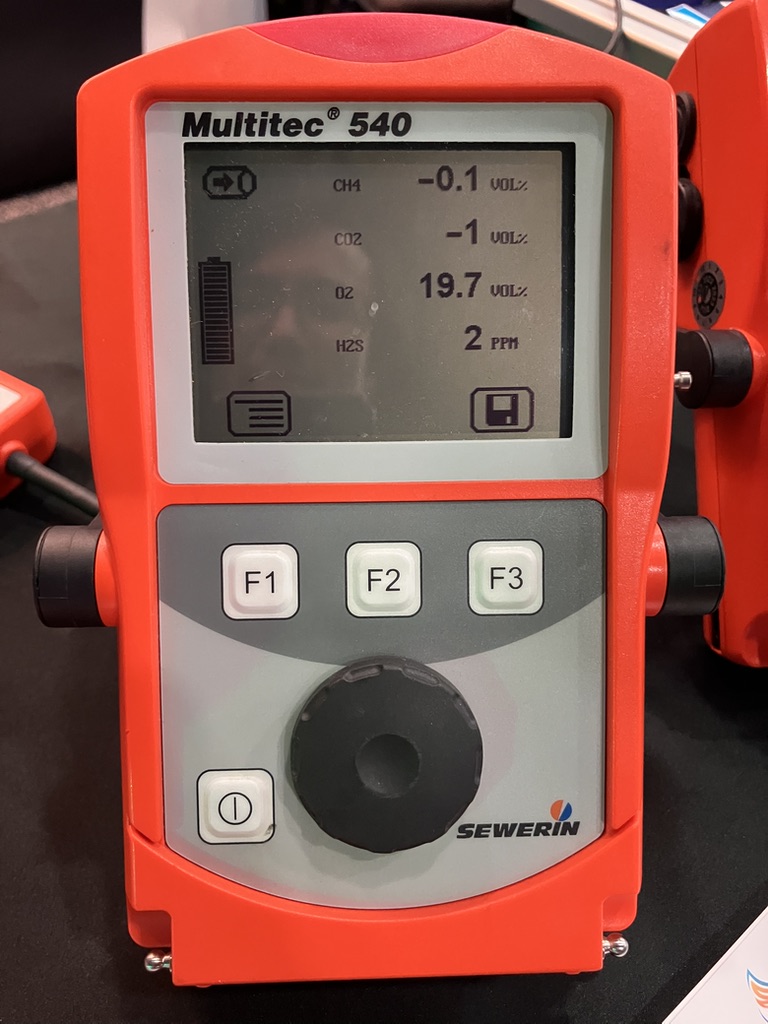
Sewerin gas meter
It would never make sense to purchase an expensive, high-tech device like this for a Solar CITIES digester. The environments where our digesters live, and the communities that use them, often lack reliable sources of funding, electricity, and replacement parts. But, it would be helpful for the organization to own one or two of these units, in order to test the efficacy of low-tech gas upgrading methods that could then be deployed elsewhere once their effectiveness has been demonstrated. Across our network of dragon-tenders, people are constantly experimenting with new innovations and “mutations” to the original IBC design. 👩🏾🔬 🧪
“Upgrading” gas means refining the raw biogas into pure methane, or almost-pure. Raw biogas contains water vapor, hydrogen sulfide, carbon dioxide, and other trace impurities that decrease the energy content of the fuel and can even lead to health problems and equipment damage over time. Upgrading gas isn’t strictly necessary if the gas is being used on-site as cooking fuel 🔥 🔥 But… if you are planning to store large quantities of gas; if you are producing more than you can use and want to sell it; if you want to use the gas to generate electricity with a biogas generator or compress it into tanks to be used as transportation fuel, then you will need to do some upgrading 🛢️ 🛢️ Here in the USA where biogas is a big business, biogas upgrading has been studied and very nearly perfected; renewable natural gas can reach purities of 96% methane (compared to 50-60% for raw biogas).
Solar CITIES digesters already include one “upgrading” feature: the hydrogen sulfide filter. (We have historically used the Family Size Biogas Desulfurizer Filter from Puxin, a Chinese company.) But our current designs don’t include any way to remove CO2 or H2O from the biogas.
H2O is relatively easy to remove. People at the conference suggested many possible ways to remove water vapor from the gas, including using a desiccant like silica gel. Desiccants are pretty cool – they can be “recharged” by heating to allow the moisture they absorbed to evaporate. Some desiccants even change color when they are fully saturated and need to be recharged! Some desiccants are specially designed to work with biogas, like the “Dry-O-Lite Desiccant” from Van Air (based in Pennsylvania, just like Solar CITIES!). Others are all-purpose desiccants, like generic silica gel. And folks have even experimented with using cat litter to absorb moisture from biogas – just make sure you use the silica-based cat litter, not clay-based! 😹 😹 (My cat actually uses the pine-based cat litter, which I don’t think has been tested yet in a biogas filter…)
CO2 is harder to remove, but not impossible. This schematic from BPC Instruments, based in Sweden, shows one way to remove CO2 by bubbling biogas through a solution of sodium hydroxide (NaOH, also known as lye or caustic soda). Another conference attendee recommended bubbling biogas through potassium hydroxide (KOH) to remove CO2. A charcoal salesman with a history in the medical field told me that anesthesiologists often scrub CO2 out of breathing lines using soda lime (a combination of lye / NaOH and CaO, also known as calcium oxide or quicklime). All of these chemicals can be hazardous if mishandled, so please follow appropriate safety procedures and wear protective gear if you’re trying this at home!
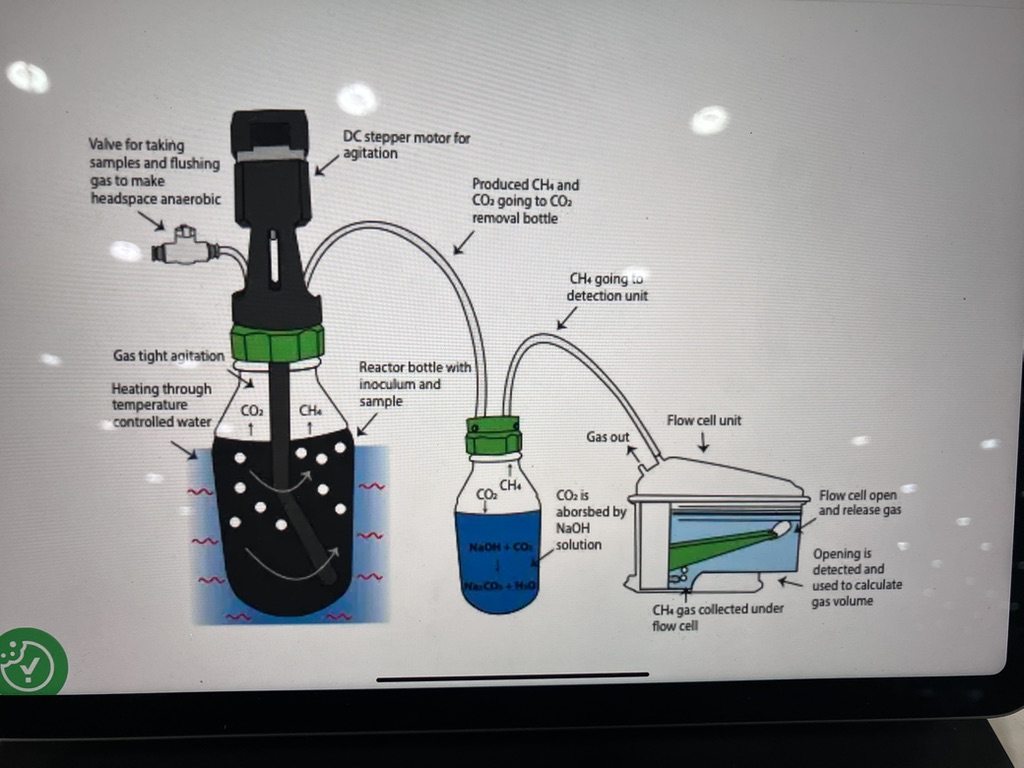
BPC Instruments schematic showing CO2 removal using NaOH
I’m excited to test out some of these possibilities with Solar CITIES micro-scale digesters! Have you tried any upgrading technologies with your home-scale setup? Let us know in the comments!
Wow great news for all biogas researchers of the world I am developing a model for kitchen garden green waste management best model biogas since 1993 I love to test some models in USA